
 Gabriele || Cruising Passion
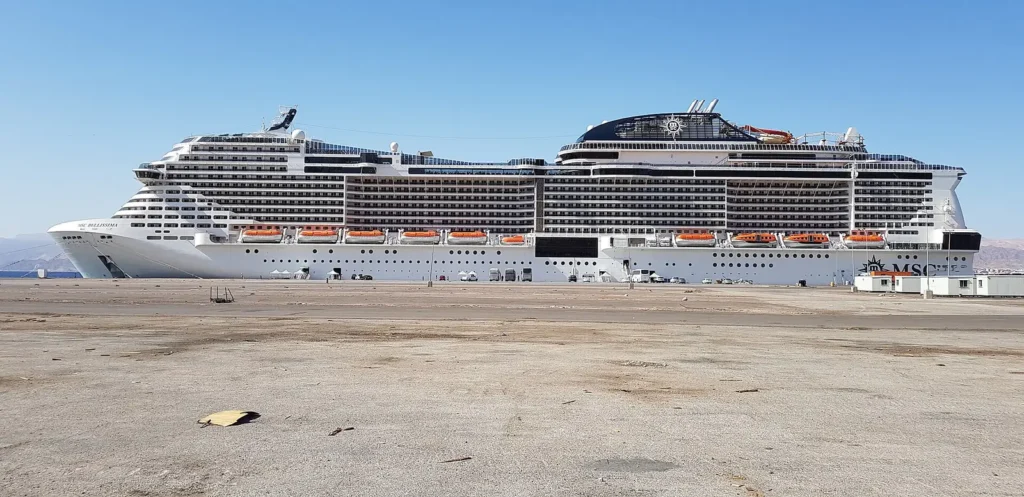
MSC Bellissima at Naha Port, Okinawa, Japan. The ship is identified as a reference vessel in the port authority's cruise hub development plan.The Naha cruise terminal project is moving into its next phase after MSC Cruises, Royal Caribbean Group, Naha Port Authority and Cruise Port Naha G.K. officially marked the start of construction on October 5, 2026. The new facility at Naha Port, Okinawa, is expected to begin operations in March 2028, but the most significant development goes well beyond the construction of a passenger terminal.
An official Japanese port development plan reveals the scale of the ambition: 71 cruise calls targeted for 2028, 89 by 2032, and a long-term preferential berthing arrangement for the two participating cruise groups. The project is designed to support some of the industry’s largest ships and strengthen Naha’s position as a potential fly-and-cruise hub in East Asia.
The findings add important context to the announcements published by MSC Cruises and Royal Caribbean Group. The port authority’s own International Passenger Ship Hub Formation Plan provides the technical and operational details behind the investment.
What Is the Naha Cruise Terminal Project?
The new terminal is being developed at Berth No. 12 in the New Port Pier area of Naha Port, on the Japanese island of Okinawa.
The project brings together two major cruise groups that compete globally but are collaborating on a shared port infrastructure initiative. Cruise Port Naha G.K., the company responsible for developing and operating the new passenger terminal, is a joint venture between CTL Maritime and RCL Cruises Ltd., representing the respective interests of MSC Cruises and Royal Caribbean Group.
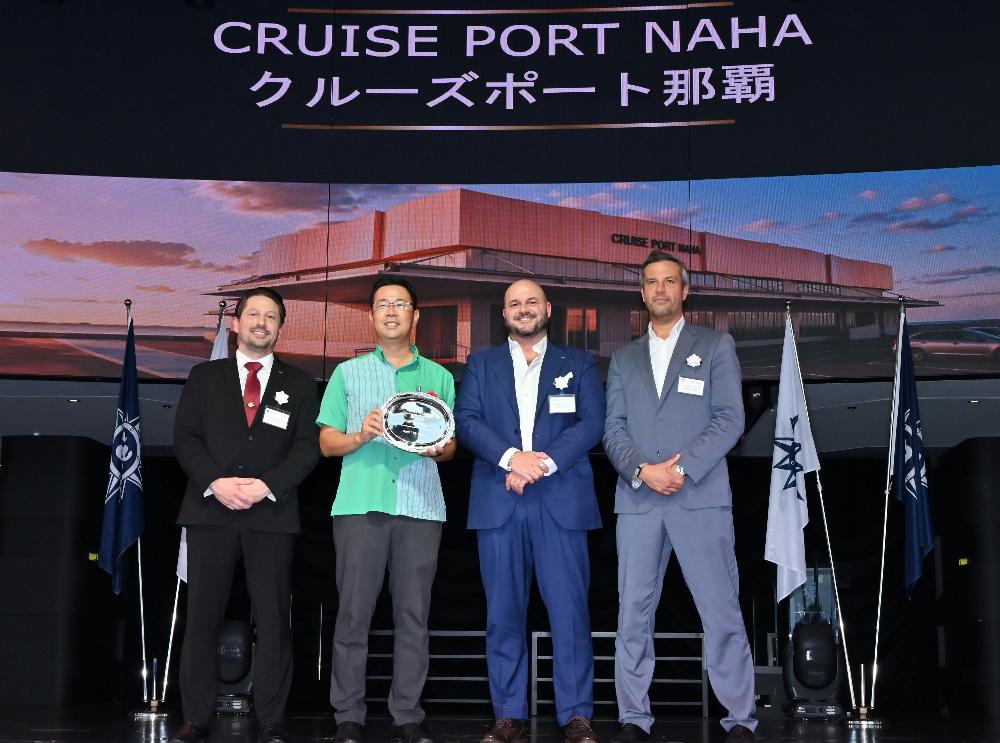
Representatives of the Naha cruise terminal project partners pose in front of a rendering of the planned Cruise Port Naha facility.The partners signed a cruise hub formation agreement with Naha Port Authority in August 2026. The construction milestone announced on October 5 formalised the start of work, with completion and the beginning of operations targeted for March 2028.
The project is intended to improve passenger handling, streamline port operations and increase the port’s ability to accommodate large cruise ships. It also supports a wider strategy to strengthen Okinawa’s role in the East Asian cruise market.
1. The New Terminal Will Cover Approximately 4,000 Square Metres
One of the most useful details comes from the port authority’s January 2026 development plan.
The document identifies a planned passenger terminal building of approximately 4,000 square metres, designed to support efficient embarkation, disembarkation and passenger transfers. The planned facility is intended to handle turnaround operations involving around 6,000 passengers.
The plan also includes a covered passenger drop-off and pick-up area, known as the curbside, with an initial planned area of approximately 500 square metres.
These are planning figures rather than a final as-built specification. The port authority’s document indicates that some details would require further coordination with the joint venture and the relevant authorities.
The infrastructure is designed to improve the handling of passengers and baggage while supporting the movement of cruise-related vehicles. It is an important distinction: the project is not simply about providing a more modern building, but about creating the operational facilities required for large-scale cruise calls and homeport-style activity.
2. Berth No. 12 Is Designed for Ships of Around 220,000 GT
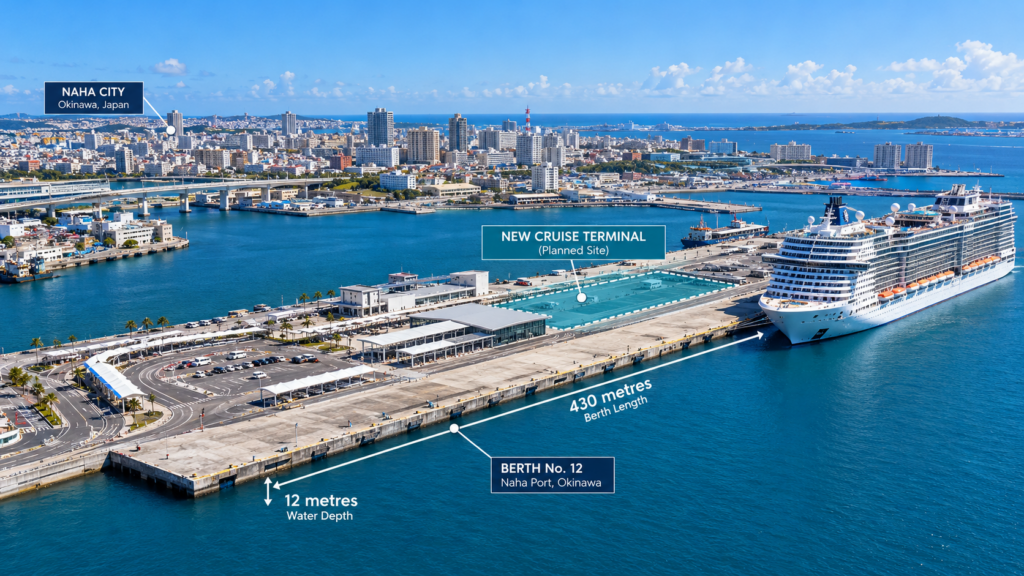
Conceptual illustration of the Naha Port cruise terminal project. The layout is illustrative and does not represent an official architectural rendering.The new passenger terminal will serve an existing cruise berth that has been developed to accommodate much larger ships than the older facilities at Naha.
According to the port authority’s plan, Berth No. 12 has a length of approximately 430 metres and a water depth of 12 metres. Its design reference is a cruise ship of around 220,000 gross tonnes, with the possibility of accepting vessels of approximately 230,000 GT following a navigation safety assessment.
The berth began receiving cruise ships in February 2023, initially without the dedicated passenger terminal now under construction.
The new development therefore combines existing marine infrastructure with additional passenger facilities, creating a more complete cruise operation.
This matters because cruise ships have continued to increase in size, while terminals must handle not only the vessels themselves but also passenger flows, buses, taxis, baggage and other ground operations.
The port authority has identified the need for a larger passenger terminal capable of supporting these requirements as part of its long-term cruise development strategy.
3. MSC and Royal Caribbean Target 71 Calls in 2028
The port authority’s plan provides a detailed forecast for cruise activity once Naha begins operating as a year-round international cruise hub.
The 2028 targets are divided between MSC Cruises and Royal Caribbean Group as follows:
| Planned activity in 2028 | Target |
|---|---|
| MSC Cruises calls | 40 |
| Royal Caribbean Group calls | 31 |
| Total planned calls | 71 |
| Planned Naha turnaround operations | 12 |
The 12 turnaround operations are included in the overall total of 71 calls. A turnaround operation involves passengers beginning or ending their cruise at the port, rather than simply visiting Naha during an itinerary.
The plan also sets a target of 89 calls in 2032, comprising 50 for MSC Cruises and 39 for Royal Caribbean Group. Twelve Naha-based turnaround operations are included in that longer-term target as well.
These figures are planning targets, not confirmed individual ship schedules or guaranteed future calls. The port authority explicitly notes that the specific vessels and deployment arrangements may change in response to commercial demand and the cruise lines’ global fleet deployment plans.
Nevertheless, the numbers show that the project has a defined operational ambition beyond the construction phase.
4. A 30-Year Agreement Gives the Partners Preferential Berth Access
One of the most significant details is the long-term arrangement governing access to Berth No. 12.
Under the port authority’s plan, the participating cruise groups are entitled to preferential use of the berth for a period of 30 years, with a maximum of 250 days of preferential use per year.
The official agreement between Naha Port Authority and Cruise Port Naha G.K. was signed on August 28, 2026, and is valid through March 31, 2058.
The arrangement is not equivalent to exclusive use of the berth every day of the year. The plan provides a defined booking window for the participating companies, after which reservations by the participating groups and other cruise lines are to be treated equally under the stated rules.
The distinction is important. This is a long-term public-private infrastructure arrangement intended to provide the cruise partners with planning certainty while allowing the port to manage wider demand.
It also helps explain why two competing cruise groups would cooperate on a shared terminal: both can support the development of infrastructure that is expected to serve their future operations.
5. The Plan Identifies MSC Bellissima and Spectrum of the Seas as Reference Ships
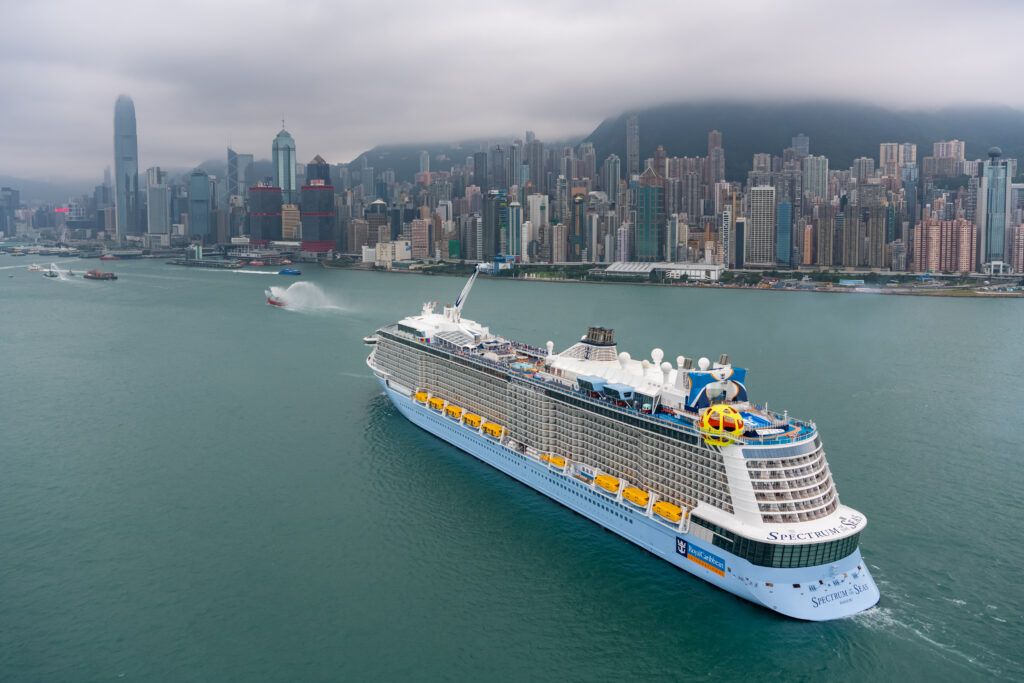
The official development plan includes indicative ship classes for the initial operating year and the longer-term target.
For 2028, the document identifies:
- MSC Bellissima class: approximately 172,000 GT.
- Spectrum of the Seas class: approximately 169,000 GT.
Royal Caribbean’s Spectrum of the Seas is a Quantum Ultra Class ship designed for the Asian market, making it a particularly relevant reference for the planned development at Naha.
The port authority’s plan also identifies potential larger-vessel deployment scenarios for 2032. These include the class represented by Wonder of the Seas, at approximately 237,000 GT, alongside other Royal Caribbean ship classes.
However, the document is explicit that actual ship assignments may change according to commercial demand and fleet deployment decisions. The reference to Wonder of the Seas class should therefore not be interpreted as confirmation that the ship itself will call at Naha in 2032.
This distinction is essential: the plan demonstrates the infrastructure’s intended capabilities and the types of operations being considered, but it does not replace future commercial itinerary announcements.
6. Naha Wants to Become a Fly-and-Cruise Hub
Perhaps the most important strategic element is the intention to develop Naha as a departure port, not just a destination on an existing cruise itinerary.
The port authority’s plan explicitly promotes fly-and-cruise operations, in which passengers travel to Okinawa by air before embarking on a cruise. The aim is to increase the range of cruise products available from Naha and encourage more visitors to spend time in the region.
The plan includes 12 Naha-based turnaround operations in the 2028 and 2032 target scenarios. These are already included in the respective totals of 71 and 89 calls.
This model could create additional opportunities for local hotels, restaurants, transport providers and tourism businesses, as passengers may arrive before embarkation or stay after disembarkation.
The port authority also identifies Okinawa’s wider tourism resources as part of the strategy, including Naha’s commercial districts, Shuri Castle, regional cultural attractions and nearby islands.
The economic benefits remain prospective rather than guaranteed. Their scale will depend on actual cruise schedules, passenger demand, air connections and the ability of local businesses to serve the additional visitors.
7. Why Okinawa Matters to the Asian Cruise Market
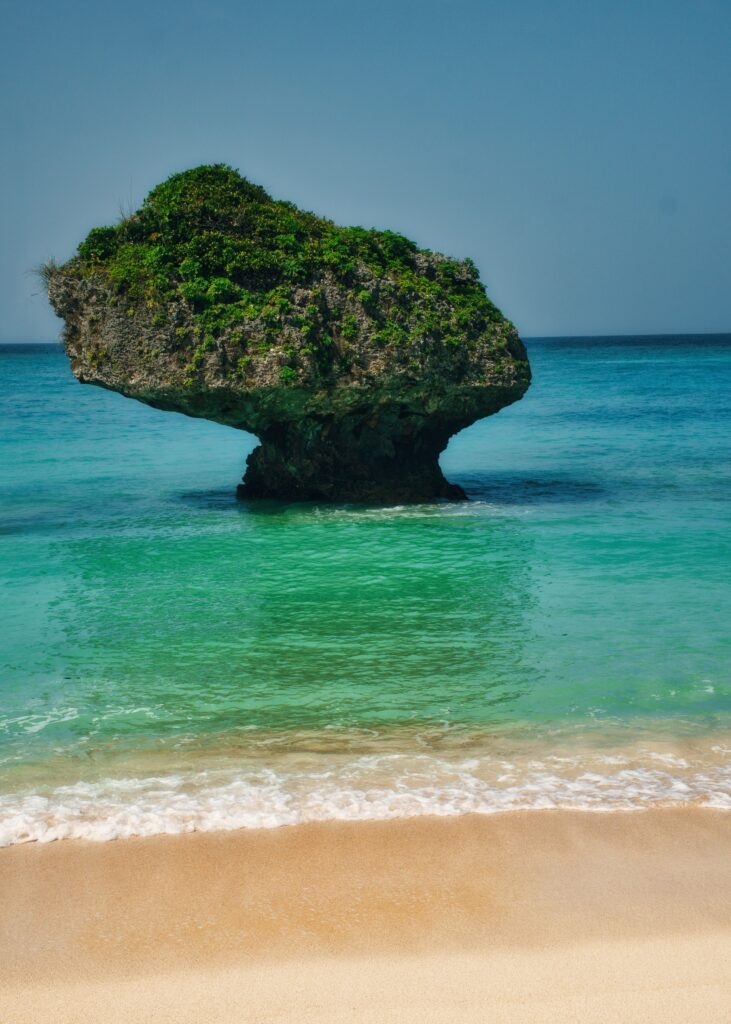
Naha occupies a strategic position in the western Pacific, with connections to major East Asian markets and access to Okinawa’s tourism infrastructure.
The port already has a substantial cruise history. The official plan records 260 cruise calls in 2019, when Naha ranked first nationally by number of calls. Following the pandemic-related interruption, cruise activity resumed in 2023, and the port recorded 175 calls in 2024.
These figures provide context for the new terminal. Naha is not attempting to establish a cruise market from scratch; it is developing additional infrastructure to support larger ships, more efficient operations and a wider range of cruise products.
The project also fits into the broader deployment strategies of cruise lines operating across Asia.
Royal Caribbean’s Asia-Pacific 2027–2028 deployment and its Spectrum of the Seas China 2027–2028 programmeillustrate the wider importance of the region to the company’s fleet planning.
MSC Cruises is also continuing to adjust its global ship deployment. Its Winter 2027–2028 deployment changes provide further context for the company’s international strategy, although they do not confirm specific Naha itineraries.
Beyond its mainstream cruise operations, MSC Group also includes the luxury brand Explora Journeys, which is explicitly mentioned in the company’s wider positioning around the development of the cruise hub.
These links provide context for the strategies of the companies involved. They should not be interpreted as evidence that any particular ship or brand has already confirmed future calls at Naha.
What Happens Next?
The immediate milestone is the construction and delivery of the new terminal. The latest company announcements target March 2028 for completion and the start of operations.
The port authority’s earlier plan anticipated terminal operations beginning in 2027 and year-round operation from 2028. The newer March 2028 target should be used when reporting the current expected opening date, while recognising that construction schedules can change.
The next developments to watch include the final terminal specifications, confirmed cruise schedules, the allocation of individual ships, and whether the planned turnaround operations translate into publicly bookable itineraries.
The project also raises practical questions about transport, passenger processing and the coordination of cruise-related traffic with the port’s existing logistics activity. These will be important as Naha prepares to accommodate more large cruise ships.
The Bottom Line
The Naha cruise terminal project is more than a new passenger building. It is a long-term infrastructure partnership involving MSC Cruises, Royal Caribbean Group, Cruise Port Naha G.K. and Naha Port Authority.
The plan combines a berth designed for ships of around 220,000 GT, a passenger terminal of approximately 4,000 square metres, preferential berth access for up to 250 days per year over 30 years, and traffic targets of 71 calls in 2028 and 89 in 2032.
Most importantly, Naha is aiming to develop its role as a fly-and-cruise hub, giving the port a broader function in the regional cruise network.
The March 2028 opening target remains the next major milestone. Whether the project reaches its longer-term ambitions will depend on the final infrastructure, commercial deployment decisions and the demand for cruises beginning or calling at Okinawa.
For the wider cruise industry, the project is a clear example of how port infrastructure and long-term cooperation between cruise operators can shape the next phase of growth in Asia.
Discover More with MSC Cruises & Royal Caribbean
Interested in exploring their ships and destinations? Visit the official websites of the two cruise groups featured in this story.
Official cruise line websites · Cruising Passion
🚢 Stay Connected with Cruising Passion
Passionate about cruises, new ships and unforgettable destinations? Join the Cruising Passion community and stay up to date with the latest cruise news, exclusive destination guides, ship launches and industry insights from around the world.
🌍 Visit our website:
www.cruisingpassion.net
Daily cruise news • New ship announcements • Destination guides • Cruise reviews • Industry insights • Exclusive updates from the world’s leading cruise lines
Sources and Further Reading
- MSC Cruises — Official announcement
- Royal Caribbean Group — Official announcement
- Naha Port Authority — International Passenger Ship Hub Formation Plan
- Naha Port Authority — Cruise hub agreement notice
- Funeco — Japanese maritime industry coverage
🔍FAQs
When will the new Naha cruise terminal open?
The latest announcement from the project partners targets March 2028 for completion and the start of operations.
Which cruise lines are involved in the Naha cruise terminal project?
MSC Cruises and Royal Caribbean Group are the participating cruise groups. The terminal will be developed and operated by Cruise Port Naha G.K., a joint venture between CTL Maritime and RCL Cruises Ltd.
How many cruise calls are planned for Naha in 2028?
The port authority’s plan targets 71 calls in 2028, including 40 for MSC Cruises and 31 for Royal Caribbean Group. The total includes 12 planned turnaround operations.
How many cruise calls are targeted for 2032?
The long-term target is 89 calls, comprising 50 for MSC Cruises and 39 for Royal Caribbean Group. These figures are planning targets rather than guaranteed schedules.
Which ships are being considered for the new terminal?
The port authority’s plan identifies MSC Bellissima class and Spectrum of the Seas class as reference vessels for 2028. It also considers larger Royal Caribbean ship classes in the 2032 scenario. Actual ship assignments may change.
Will the new terminal be used for cruises departing from Okinawa?
That is one of the project’s objectives. The port authority intends to promote fly-and-cruise operations, allowing passengers to travel to Okinawa by air and begin their cruise in Naha. The plan includes 12 turnaround operations in both the 2028 and 2032 scenarios.
How long will MSC Cruises and Royal Caribbean have preferential access to the berth?
The plan provides for preferential use for 30 years, with a maximum of 250 days per year, subject to the stated booking and port-management arrangements.


