
 Gabriele || Cruising Passion
An island of turquoise waters, ancient ruins, traditional villages and unforgettable sunsets — discovered through our own 8-day journey across Kos.
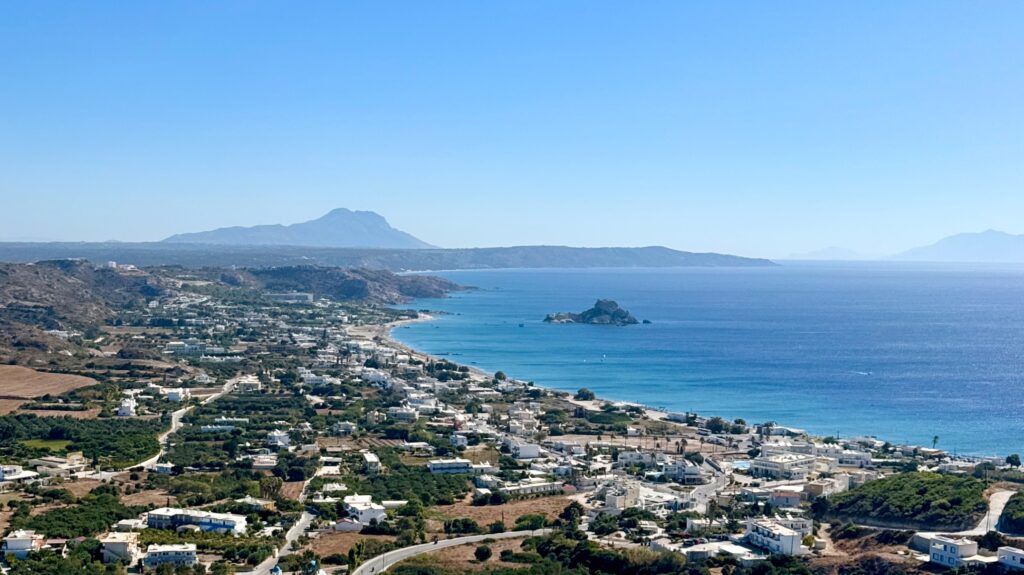
There are Greek islands that feel polished, glamorous and almost impossibly perfect.
And then there is Kos.
Kos has beautiful beaches, turquoise water, archaeological treasures, lively resorts and spectacular sunsets. But what stayed with us after eight days was something simpler: the feeling that, beneath the tourism, there is still a very recognizable Greek island life.
Locals going about their day. Small tavernas. Ancient ruins sitting surprisingly close to modern streets. Villages climbing into the hills. Families on the beach. Cyclists moving around Kos Town. And, almost everywhere we went, that extraordinary Aegean light.
This Kos Travel Guide is built around both sides of the island.
The first part explains Kos: its history, character and the places worth seeing. The second takes you through the beaches, archaeological sites, towns and villages that deserve a place on your itinerary. The final part is different: it is our real eight-day journey, including where we stayed, how we moved around the island, what we paid and what we would do again.
Because this isn’t a guide written from a desk.
This is Kos as we experienced it.
1. Getting to Know Kos
Kos is one of the Dodecanese islands in the southeastern Aegean and the third-largest island of the group. It is particularly known for its beaches, archaeological heritage, cycling culture, traditional villages and lively seaside resorts.
Its location is part of its character. Kos sits close to the coast of Asia Minor, and throughout its history its position has made it strategically important.
Today, however, the first impression is usually much simpler: sea, sun and an easy-going island atmosphere.
Kos Town is the island’s main urban centre and combines remarkably different architectural layers. Italian-period buildings stand alongside white island houses, medieval fortifications, mosques, restored ancient monuments and modern businesses.
That mixture is one of the things we liked most about the island.
You can walk through a modern street, turn a corner and suddenly find yourself standing among ancient ruins.
2. A Brief History of Kos
Kos has an unusually deep historical identity for a destination so strongly associated with beach holidays.
The island is traditionally associated with Hippocrates, the ancient physician regarded as the father of medicine. The Asclepieion, just outside Kos Town, is one of the places that best represents the island’s ancient medical heritage. Official Greek tourism sources describe the site as one of the island’s defining historical attractions.
The ancient city of Kos developed into an important centre of the eastern Aegean. Roman influence subsequently left a significant architectural footprint, much of which can still be seen around modern Kos Town.
Centuries later, Kos became part of the world of the Knights of Saint John. Their presence is particularly visible in the Castle of Neratzia in Kos Town and in the castles of Antimachia and Kefalos. Neratzia began to be constructed in the 14th century on the remains of an earlier fortress and was developed as a major defensive structure.
The island later passed through Ottoman rule before becoming part of the Italian Dodecanese in the early twentieth century. The Italian period left a distinctive architectural legacy that is still visible today.
This is why Kos can feel almost like an open-air history book.
Greek antiquity, Roman architecture, medieval fortifications, Ottoman influence and Italian-era buildings all coexist on the same island.
And then, just a few kilometres away, there is a beach.
3. Why Visit Kos?
Kos works particularly well because it does not force you to choose between a beach holiday and a cultural trip.
You can spend the morning walking among Roman ruins, swim in crystal-clear water in the afternoon and watch the sun disappear behind the Aegean from a mountain village in the evening.
The island also has a well-established cycling culture, with cycle paths particularly around Kos Town and along parts of the coast.
For us, though, the strongest argument for visiting Kos was simpler:
the sea consistently delivered.
Every beach we visited gave us something different, but none left us disappointed.
4. What to See in Kos
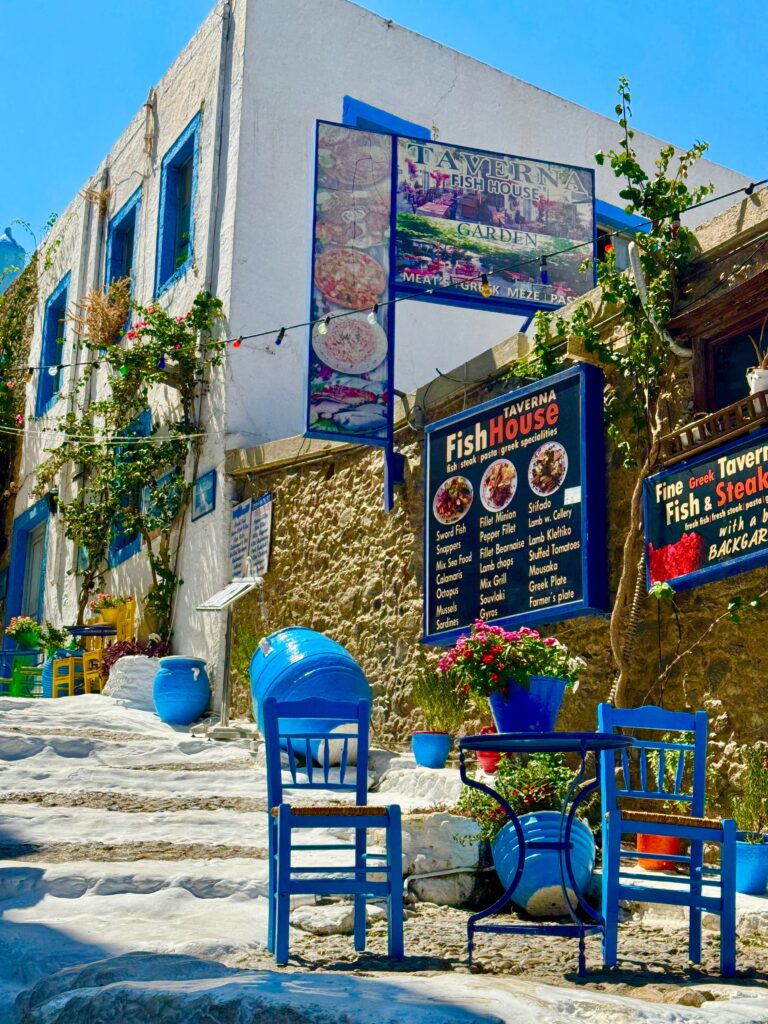
Kos Town
Give Kos Town at least one full day, and ideally return for one or two evenings.
The historic centre is compact enough to explore largely on foot once you have parked.
During our visit, we explored:
- Casa Romana
- Roman Odeon
- Western Archaeological Zone
- Altar of Dionysus
- Sanctuary of Hercules
- Church of Agia Paraskevi
- Kos Municipal Market
- Hippocrates’ Plane Tree
- Neratzia Castle
- the historic bridge beside the castle
The archaeological landscape is particularly impressive because it isn’t confined to a single museum complex. Ancient remains appear throughout the city.
Casa Romana
The Roman House is interesting for its architecture and surviving decorative elements, although it was one of the places that impressed us less than expected.
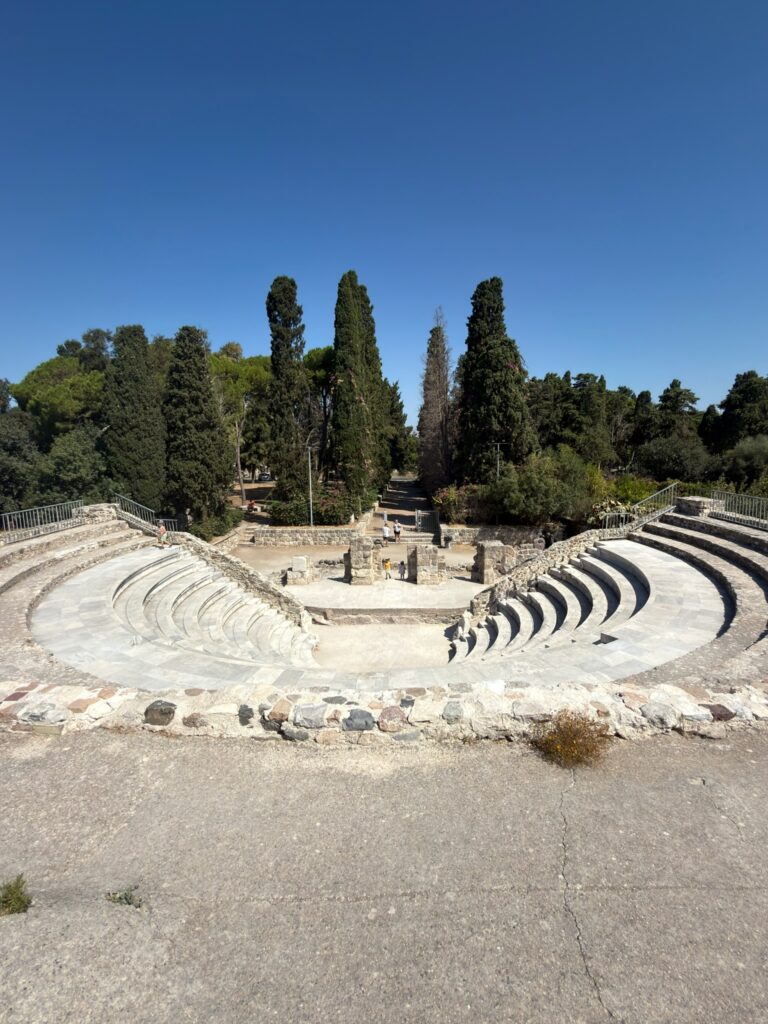
Roman Odeon
A very different experience.
The Odeon is beautifully preserved and gives a strong impression of the scale and organisation of Roman Kos.
Western Archaeological Zone
One of the highlights of our morning.
The ruins are extensive enough to make you understand that ancient Kos was much more than a collection of isolated monuments.
Altar of Dionysus
Worth seeing while exploring the archaeological area, although personally we expected more from it.
Sanctuary of Hercules
The remains are much less substantial today, but the site is part of the wider archaeological story of ancient Kos.
Hippocrates’ Plane Tree
The famous plane tree is one of those places where historical symbolism matters as much as what you physically see.
The tree itself is old and visually striking, although its condition is far from perfect.
Neratzia Castle
One of the places we enjoyed most.
The castle dominates the entrance to Kos harbour and was developed by the Knights of Saint John from the fourteenth century onward. Its position beside the historic bridge and the Plane Tree makes this one of the most atmospheric corners of Kos Town.
The castle is impressive, although visitors should not expect every part of the complex to be accessible.
5. The Best Beaches We Visited
Kos has a long list of beaches. The official tourism board highlights everything from the northern beaches of Tigaki and Marmari to the rocky bays around Kefalos.
We didn’t try to visit every beach.
Instead, we concentrated on several beaches around Kos Town and Kefalos and spent enough time at each to understand what made it different.
Lambi Beach


Lambi was our introduction to Kos’s beach life because we stayed nearby.
The water is remarkably clear and blue, with a pebbly shoreline and numerous organised beach establishments.
Sunbeds were comfortable and prices were reasonable during our stay. We paid €10 for two sunbeds and an umbrella, although prices can vary.
What we particularly liked was the balance.
It is developed enough to have everything you need, but it didn’t feel unpleasantly crowded during our early-September visit.
Our verdict: an excellent base if you are staying around Kos Town.
Paradise Beach
Paradise Beach was our first real “wow” moment of the holiday.
The approach itself is part of the experience. You park higher up and the beach opens below you, creating a fantastic first view.
The water was intensely blue and transparent, while the beach itself was sandy and beautiful.
There are organised sections with comfortable sunbeds, and a large restaurant where we found good food at reasonable prices.
We paid €20 for two sunbeds and an umbrella.
If you’re planning a first trip to Kos, Paradise Beach deserves a place on the itinerary.
The official Greek tourism site also identifies Paradise Beach as one of the standout beaches in the Kefalos area.
Agios Stefanos Beach
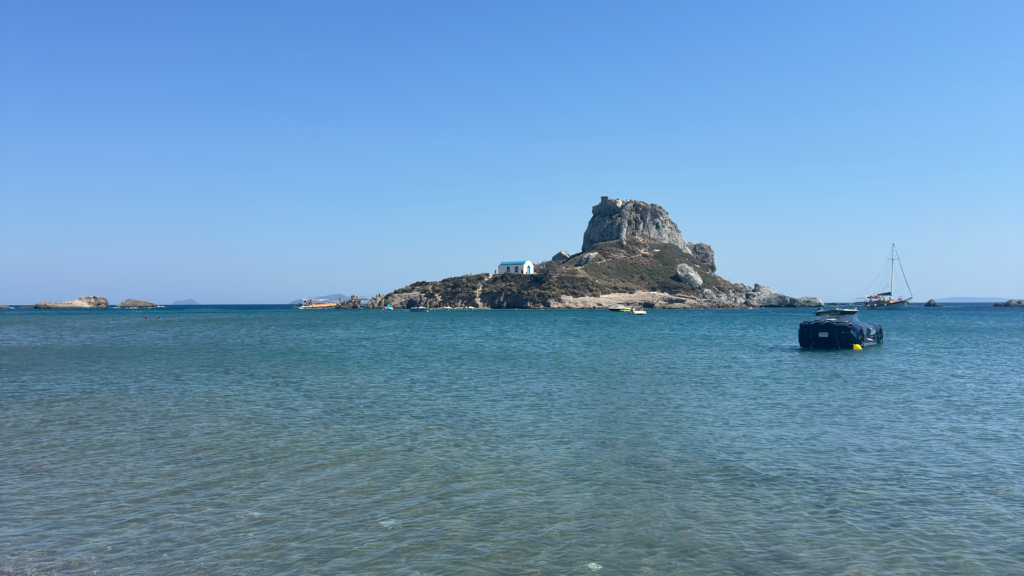
Agios Stefanos is different.
And that’s exactly why we loved it.
Here, the beach and history are almost inseparable.
Ancient ruins sit directly beside the shoreline, while the tiny church on the island of Kastri creates one of the most recognisable views in this part of Kos.
The water is incredibly clear and we saw plenty of fish, so bring a mask.
The beach itself is a mixture of sand and stones, and there are several organised sections with comfortable sunbeds.
Parking was easy for us, with several access points.
We spent the entire day here.
Our verdict: one of the essential stops in southern Kos because it combines three things in one place — beach, archaeology and scenery.
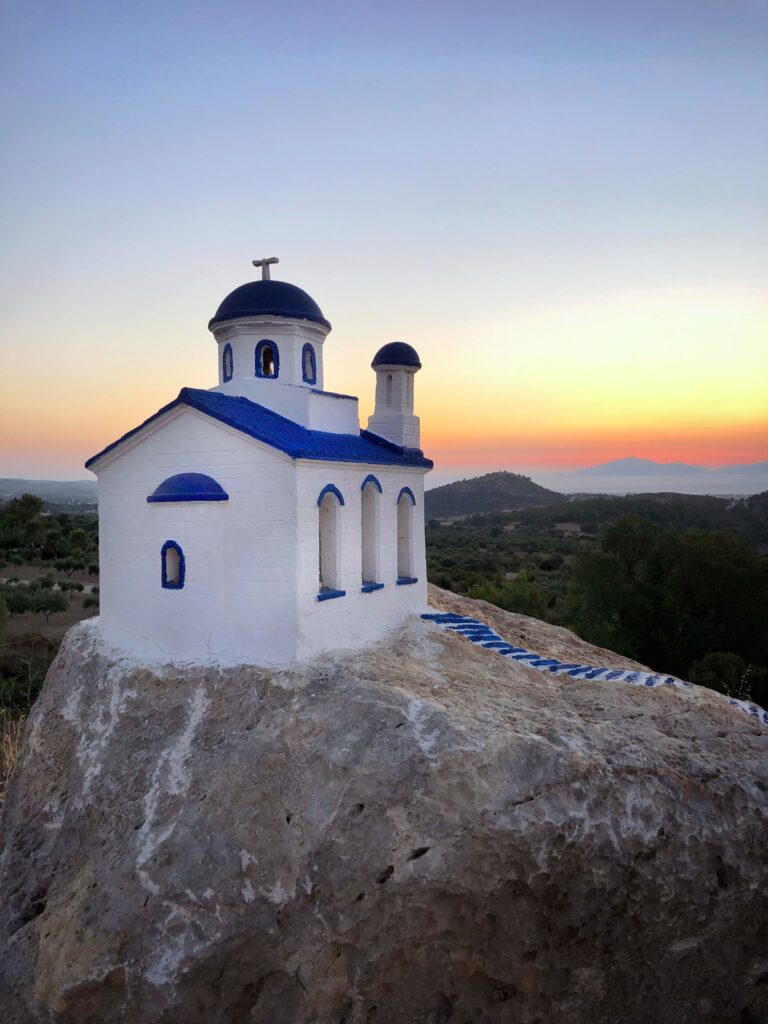
Paralia Kefalos
From the road, Paralia Kefalos doesn’t necessarily look like the most spectacular beach on the island.
Then you get into the water.
Everything changes.
The water was exceptionally clear, with plenty of fish, while the sandy beach has several organised sections.
Restaurants and services in Kefalos are immediately accessible from the road.
It is a good example of something we discovered repeatedly in Kos:
don’t judge a beach entirely from the first impression.
Camel Beach
If we had to choose our favourite beach of the trip, Camel Beach would probably be it.
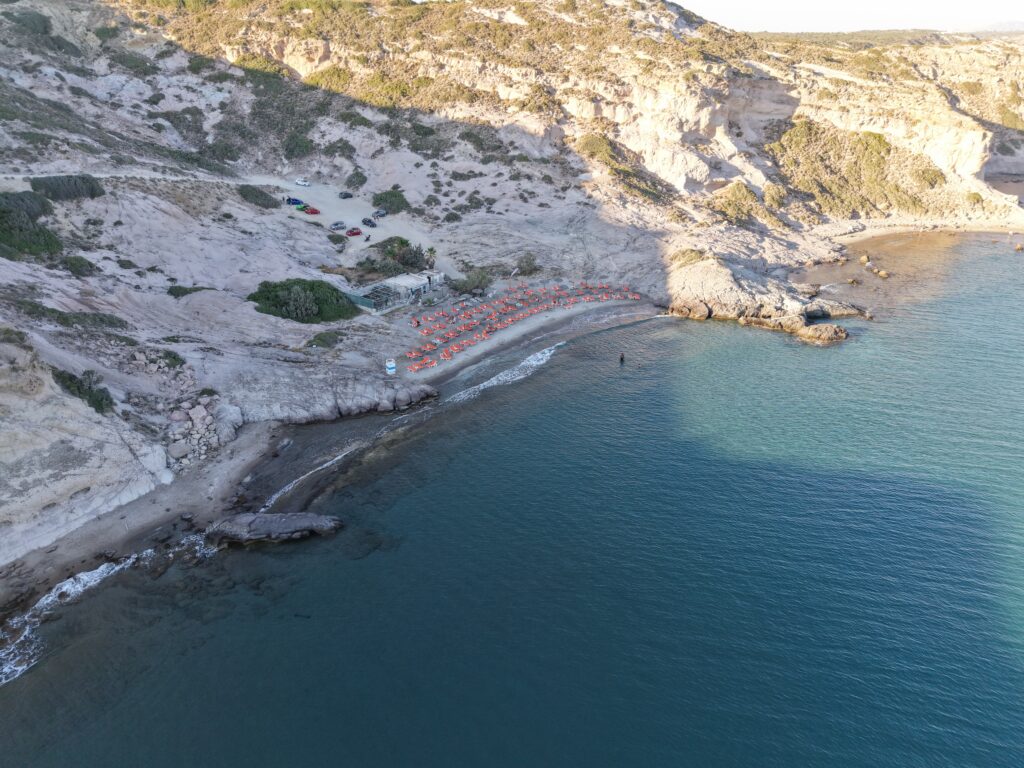
The first view as you descend towards the bay already gives you the feeling that you’ve found somewhere special.
The water is incredibly clear, there were plenty of fish and the rocky surroundings create a beautiful natural setting.
There is sand on the beach, with rocks extending into the water.
There is an organised section, but the beach is relatively small and the sunbeds can fill quickly.
There is also no proper beach service comparable to a large resort beach, so bring food and drinks if you plan to spend the whole day here.
For us, this was exactly the point.
Camel Beach felt more intimate and natural.
The official Greek tourism guide also describes Camel as a rocky-bay beach in the Kefalos area.
Our verdict: a must.
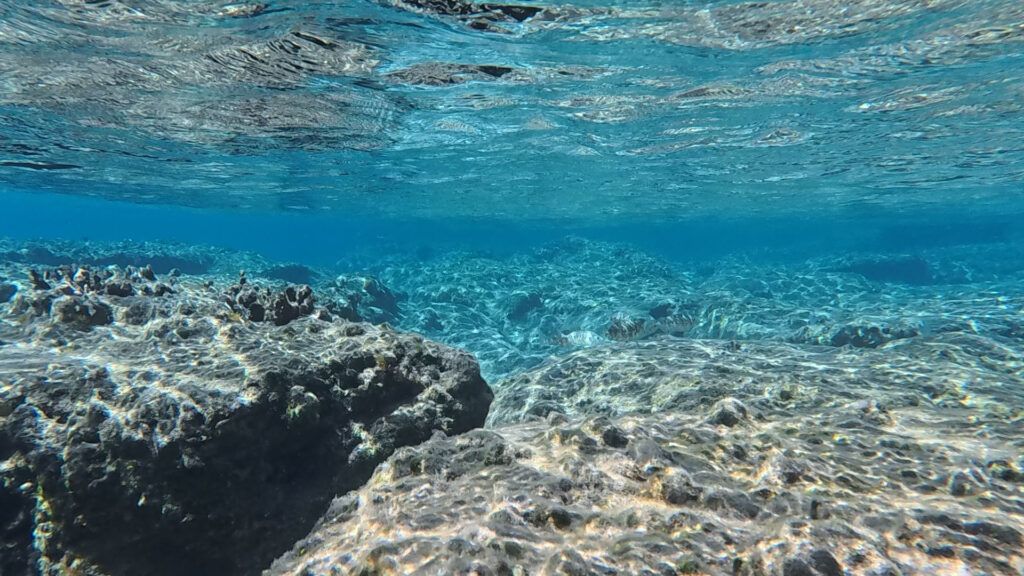
Markos Beach
Markos Beach gives you the opposite feeling.
Where Camel Beach feels intimate, Markos feels almost endless.
When you enter the beach and look along the shoreline, the amount of sand in front of you is immediately impressive.
The water was again crystal clear and intensely blue.
There are several organised areas, plus beach kiosks and restaurants. Some services require a little walking along the beach, but nothing difficult.
Because the beach is so large and there are multiple establishments, it felt unlikely to sell out completely even during a busy period.
Our verdict: an excellent choice if you want space, sand and a relaxed full beach day.
The official tourism board also includes Markos among the notable beaches around Kefalos.
6. Zia: The Sunset You Shouldn’t Miss
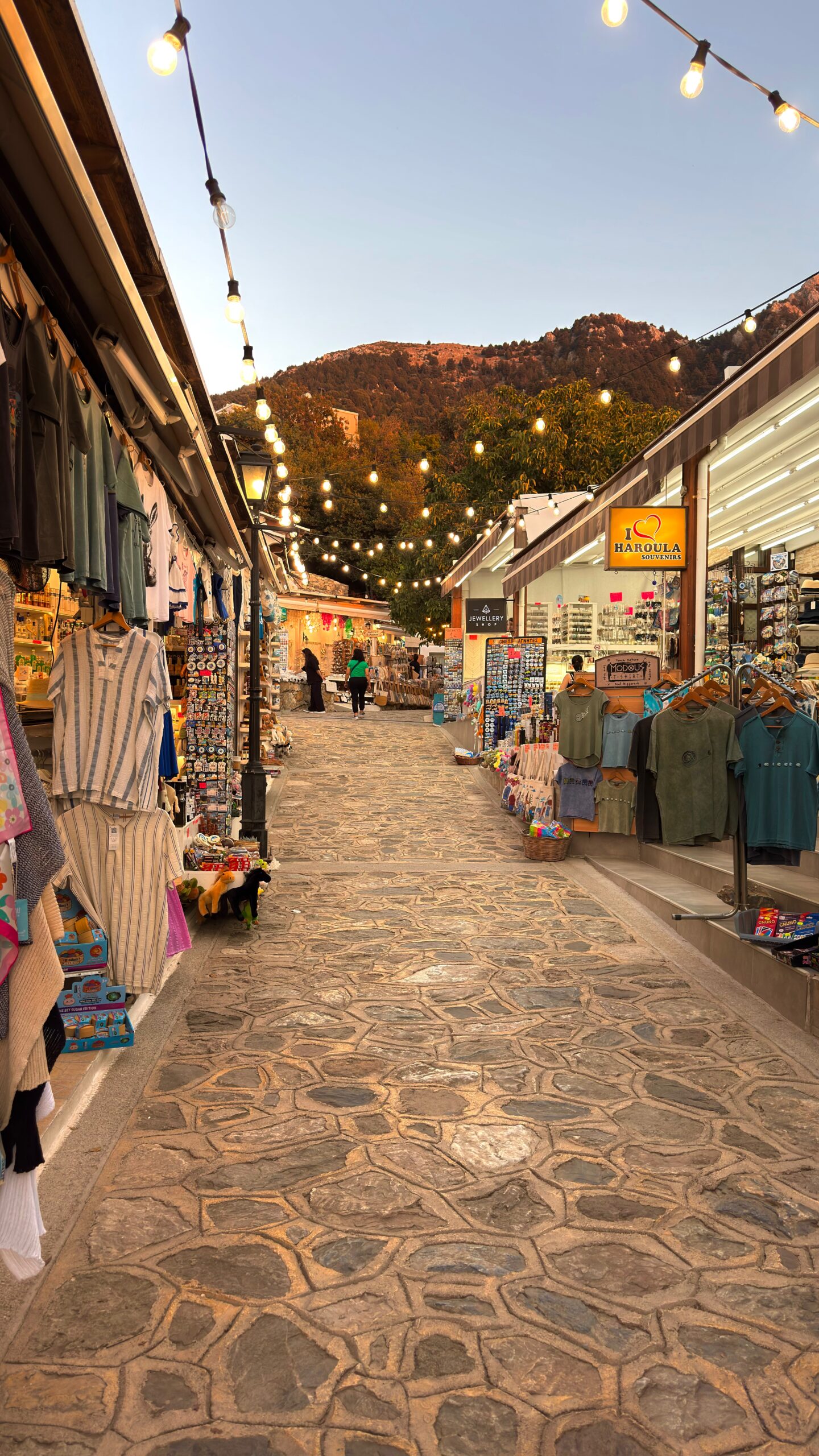
Zia sits in the mountains above Kos and offers one of the island’s most memorable sunset experiences.
We arrived about half an hour before sunset.
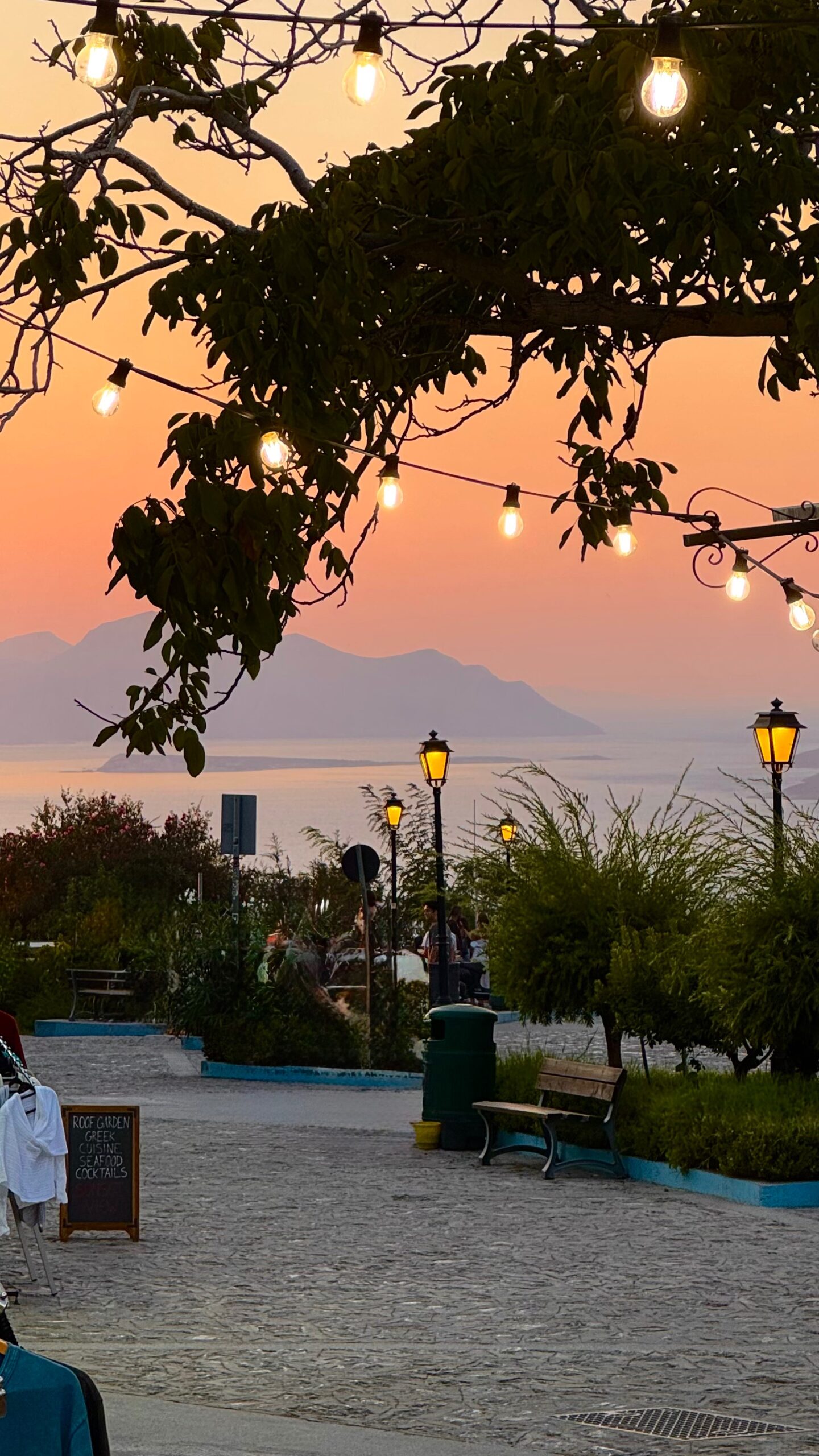
In hindsight, we would arrive earlier.
The atmosphere is wonderful: narrow streets, small shops, tavernas, traditional architecture and people gathering for the evening.
Parking can be challenging around sunset. There is a large car park, but it can fill quickly.
Our advice:
Arrive early, park wherever you can legally and safely, walk around before the golden hour and then find your viewing point.
During our September visit:
- recommended arrival: around 18:30–18:45
- golden hour: approximately 19:10–19:40
- sunset: around 19:45
These times naturally change through the season.
After sunset, stay for dinner.
We did, and we would absolutely do it again.
7. Kefalos, Kardamena and the Villages
Kefalos
Kefalos became our base for most of the second half of the trip.
It is a useful place to stay because many of the beaches we wanted to visit are nearby, while the village itself offers restaurants, shops and everyday services.
The elevated position also creates spectacular views over the surrounding coast.
Kardamena
We visited Kardamena for dinner after our day at Markos Beach.
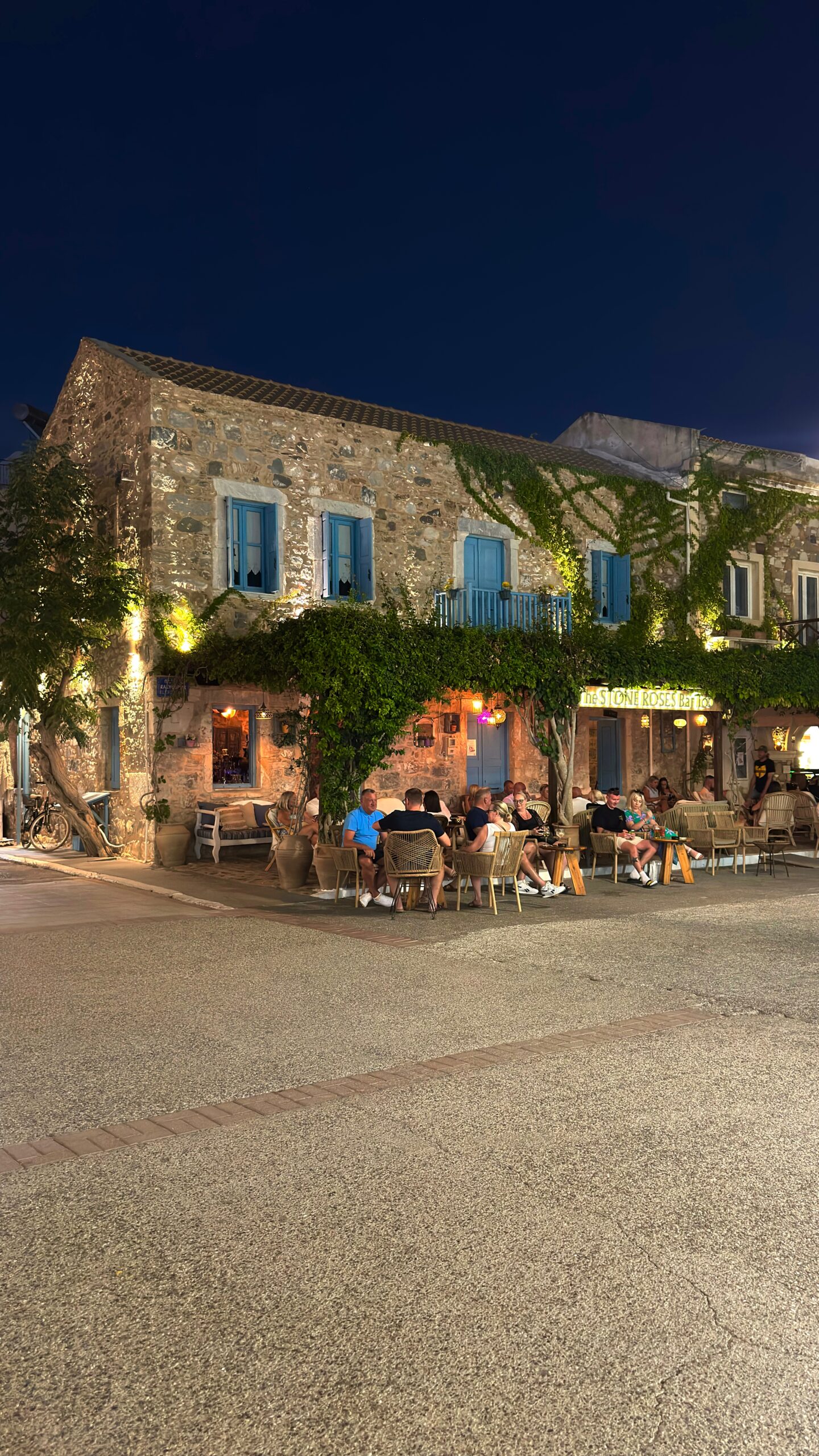
It has a very different energy from the quieter beach areas but shares some of the evening appeal of Kos Town.
If you enjoy walking around after dinner, looking at restaurants, lights and the waterfront, Kardamena is worth including.
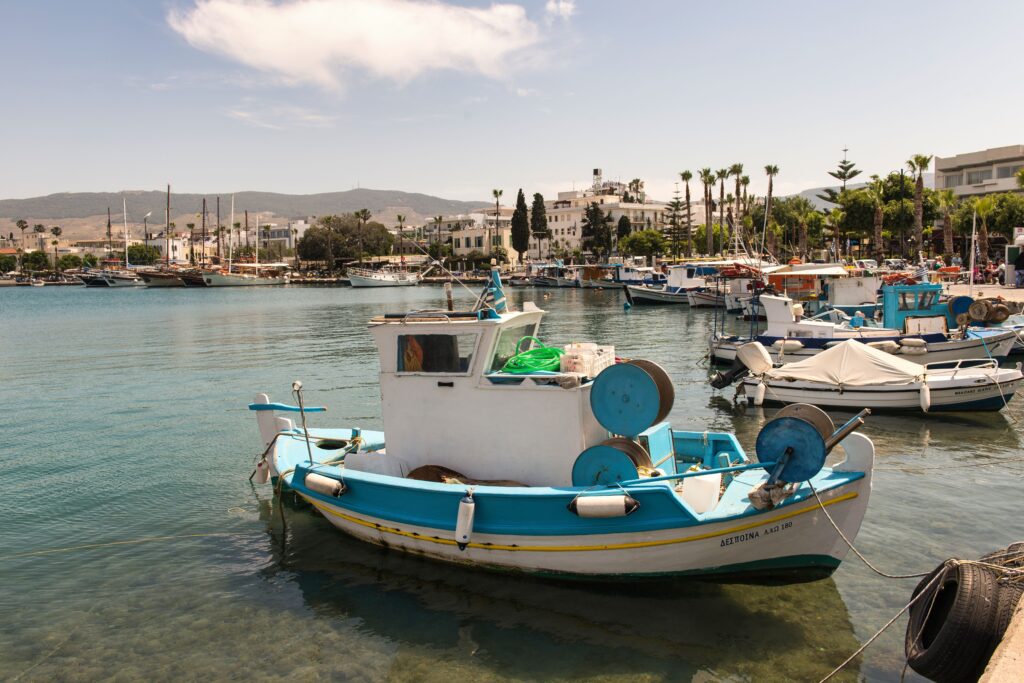
Kardamena’s waterfront is particularly pleasant to explore on foot, with fishing boats, restaurants and the sea creating a relaxed evening atmosphere.
8. Kos Castles & Ancient Sites
Kos rewards travellers who make time for history.
Asklepieion
If you only visit one major archaeological site outside Kos Town, make it the Asklepieion.
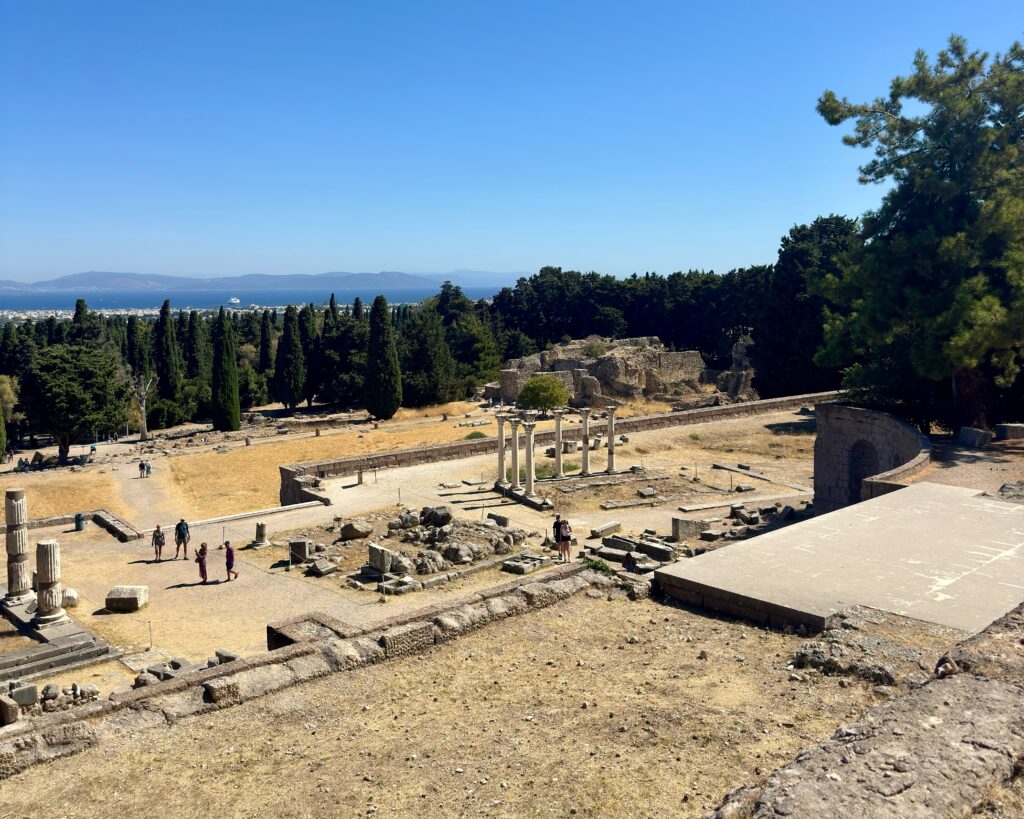
The sanctuary is closely associated with the medical tradition of Kos and with the island’s connection to Hippocrates. The official Greek tourism authority specifically identifies the Asklepieion among the island’s key attractions.
We considered it an absolute must-see.
Allow enough time, wear comfortable shoes and bring water, particularly in warmer weather.
Antimachia Castle
Another highlight.
The medieval castle stands above the surrounding landscape and retains an impressive sense of scale.
The Greek tourism authority describes Antimachia as a remarkably well-preserved fourteenth-century medieval castle whose walls contain old churches and remains of former settlements.
For us, it was one of the most satisfying historical stops of the trip.
Kefalos Castle
This was the exception.
The location is interesting and the history is worth knowing, but personally we found the site much less impressive than Neratzia or Antimachia.
That is precisely why it belongs in an honest travel guide.
9. Our 8-Day Kos Experience
Now we move from the destination guide to our actual journey.
This is the itinerary we followed — not the plan we originally made before travelling.
DAY 0 — ARRIVING IN KOS
September 1
We flew from Treviso at 12:55, arriving in Kos at 16:25 local time.
After collecting our rental car, we drove to Aegean Blu Kos in Lambi, checked in, showered and headed into Kos Town for dinner.
It was a simple first evening, but it immediately gave us the first taste of Kos after dark.
DAY 1 — ANCIENT KOS & LAMBI
September 2
We spent the morning exploring the historical heart of Kos Town.
Our route included the archaeological areas, Casa Romana, Roman Odeon, Western Archaeological Zone, Altar of Dionysus, Sanctuary of Hercules, Agia Paraskevi, Municipal Market, Hippocrates’ Plane Tree, Neratzia Castle and its historic bridge.
In the afternoon, we went to Lambi Beach.
It was the perfect contrast: ancient Kos in the morning, Aegean water in the afternoon.
🎬 Watch the Reel
A SUNRISE BEFORE MOVING ON
Before checking out of Aegean Blu the following morning, we woke up early and flew the DJI Air 3S over Lambi Beach.
The island looked completely different at sunrise.
No crowds. No traffic. Just the coastline, the sea and the first light of the day.
It became one of our favourite visual moments of the entire trip.
🎬 Watch the sunrise hyperlapse
DAY 2 — PARADISE BEACH & KEFALOS
September 3
We checked out by 11:00 and drove south towards Paradise Beach.
This was the first real beach day of the trip and, visually, one of the strongest.
After the beach we stopped for groceries before checking into Alora House in Kefalos between 16:00 and 18:00.
The evening ended with a shower and dinner in town.
🎬 Watch the Reel
DAY 3 — AGIOS STEFANOS
September 4
We spent the entire day at Agios Stefanos.
This became one of the most memorable beach days because of the unusual combination of clear water, ancient ruins and Kastri sitting offshore.
We also had the chance to snorkel and see fish close to the beach.
🎬 Watch the Reel
DAY 4 — PARALIA KEFALOS & ZIA
September 5
The morning was spent at Paralia Kefalos.
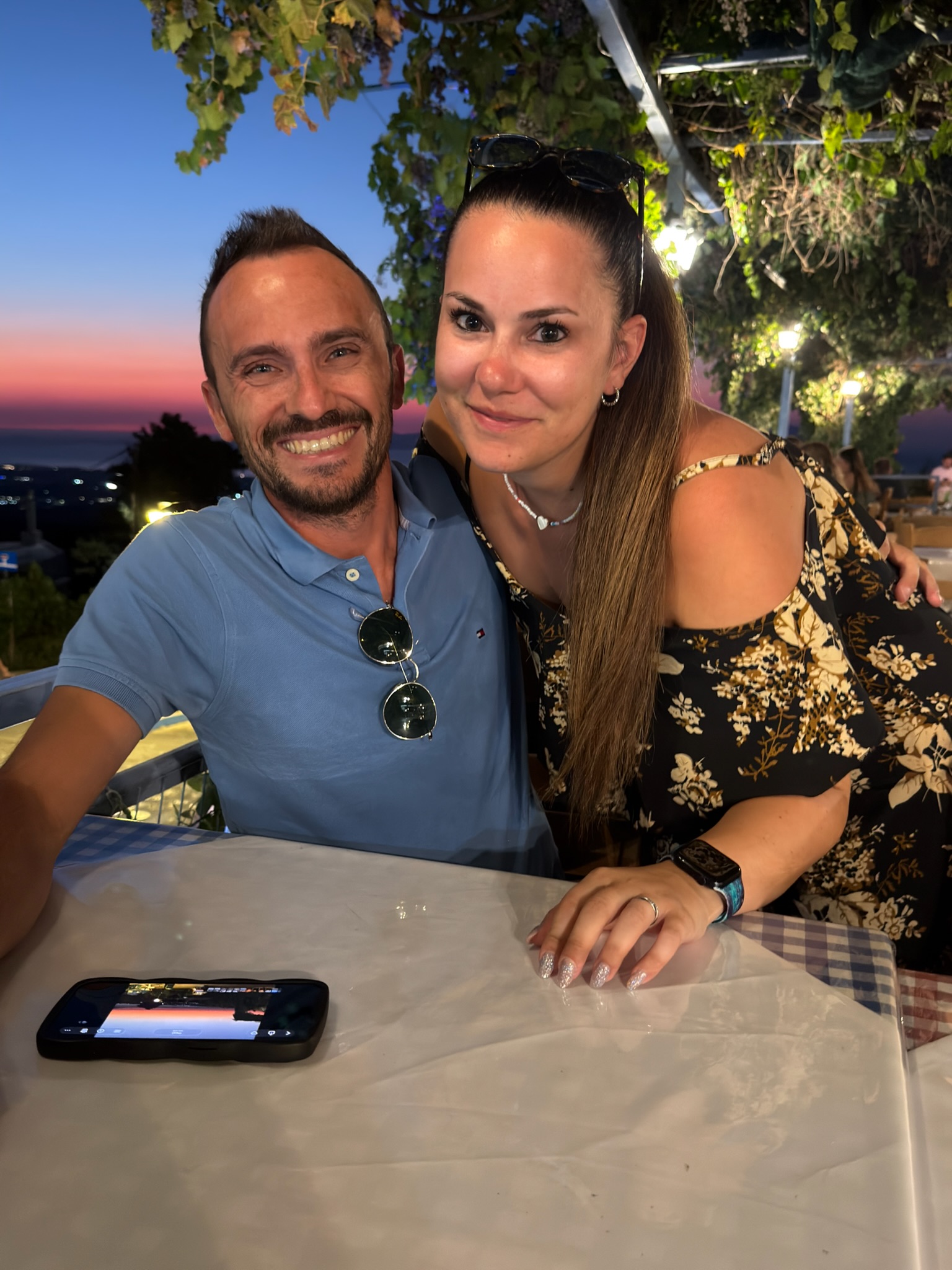
Later, we headed to Zia for sunset and dinner.
The transition from a beach morning to a mountain sunset made this one of the most complete days of the trip.
🎬 Watch the Reel
DAY 5 — CAMEL BEACH
September 6
Camel Beach deserved an entire day.
We swam, explored the water, snorkelled and spent hours around the bay.
We also flew the drone, which gave us a completely different perspective of the coastline.
Of all the beaches we visited, this was the one that impressed us most personally.
🎬 Watch the Reel
DAY 6 — MARKOS BEACH & KARDAMENA
September 7
Another full beach day.
This time, Markos Beach offered a completely different experience: more space, more sand and a much broader coastline.
In the evening we drove to Kardamena for dinner.
🎬 Final days Reel
Markos Beach, Kardamena & the final days in Kos
DAY 7 — THE LAST DAY
September 8
Our final day was dedicated almost entirely to history.
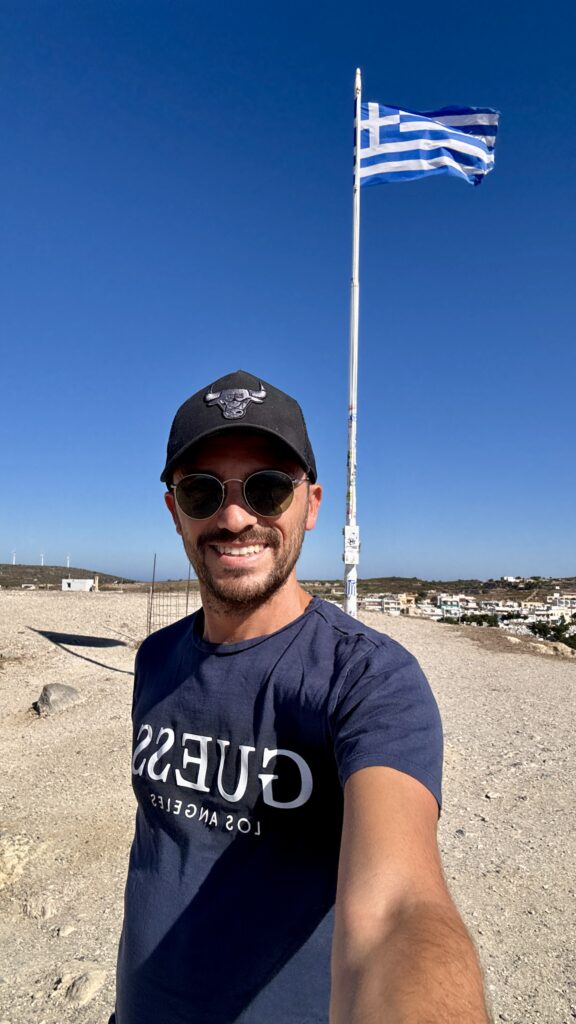
After checking out, we visited Kefalos Castle, followed by the Asklepieion and Antimachia Castle.
Then came lunch and the final drive to Kos Airport.
We needed to be at the airport around 14:00–14:30 for our 16:50 flight back to Treviso.
Eight days had gone surprisingly quickly.
10. Where We Stayed
Aegean Blu Kos — Lambi
Our rating: 7/10
We stayed here from September 1 to September 3.
The apartment was large, with a spacious main room containing a sofa bed, television, kitchenette and dining area, plus a separate bedroom with another TV and bathroom.
The bed was comfortable, the room was clean and the bathroom had a particularly large shower.
The swimming pool was a useful extra, although not the property’s strongest feature.
What really worked was the location.
Lambi Beach was easily walkable, and Kos Town was also reachable on foot if you don’t mind a longer walk.
Parking was included and convenient.
The main drawbacks were some humidity smell in the corridors and limited sound insulation towards the corridors, although neither became a serious problem.
Best for: travellers looking for good value and a convenient base near Kos Town and Lambi.
Alora House — Kefalos
Our rating: 9/10
This was our favourite of the two accommodations.
It felt much more like a small private apartment, with a kitchenette, living area, large bedroom, bathroom and terraces.
But the real selling point was the view.
The property sits above Kefalos, below the castle, giving you a spectacular elevated view over the area.
It was clean, quiet, had excellent parking and the owner was friendly and available.
There was essentially nothing we disliked about it.
Best for: couples or families who want space, privacy, parking and a spectacular Kefalos setting.
11. Renting a Car in Kos
For this trip, we rented through Green Motion.
The car we actually received was an Opel Corsa, practically new, with approximately 10,000–20,000 km.
The experience was very positive:
- professional and friendly staff;
- quick collection;
- quick return;
- insurance already included in our price;
- no problems during the rental;
- petrol engine.
The rental itself cost €307.30, with approximately €800 required as a deposit.
For us, renting a car was absolutely worthwhile.
12. Driving Around Kos
Driving on Kos was actually better than we expected.
The roads were generally in good condition, traffic was limited and parking was surprisingly manageable.
Google Maps worked perfectly through CarPlay.
There were a few unpaved sections, but nothing that caused us significant problems.
During our trip we drove approximately 300 km.
Fuel was one of the more expensive aspects of the trip, with prices around €2.06–€2.30 per litre during our stay.
If you’re planning to explore beaches, villages and archaeological sites rather than staying in one resort, we would strongly recommend having a car.
13. Food in Kos
Greek food did not disappoint us once.
During our trip we ate:
- pita gyros;
- lamb chops;
- pork with honey;
- saganaki cheese.
Our personal winner?
Gyros.
We also ate at Ficus in Kefalos and used Gim Market for groceries, which became our preferred supermarket during the stay.
Our overall impression was that food prices were broadly in line with what we expected and, compared with some other popular European holiday destinations, still felt reasonable.
14. Kos With Children
Kos worked extremely well for us as a family destination.
The beaches were generally easy to manage, and even the less-serviced beaches were perfectly workable with a child as long as you plan ahead.
Our daughter particularly loved the sea and especially Camel Beach, where the fish made snorkelling one of the most enjoyable activities of the trip.
The archaeological sites were also manageable. The main rule is simple:
bring plenty of water and take breaks.
Even Zia worked well for a family, despite the uphill streets.
Overall, we found travelling around Kos with a child surprisingly easy.
15. How Much Does a Trip to Kos Cost?
One of the most useful parts of this guide is that these are our real numbers, not an internet estimate.
Our trip was for three people over eight days.
Our total cost
€2,844.80
That works out at approximately:
€118.53 per person per day
Our major pre-trip costs were:
| Expense | Cost |
|---|---|
| Flights | €500.00 |
| Aegean Blu Kos | €225.04 |
| Alora House | €408.00 |
| Car rental | €307.30 |
| Travel insurance | €51.63 |
| Airport parking | €59.95 |
| Spending during the trip | €1,292.20 |
| TOTAL | €2,844.80 |
The on-island spending included fuel, food, drinks, beach sunbeds, attractions, souvenirs and other everyday expenses.
This is therefore not a universal Kos budget. Your costs will vary according to flights, accommodation, restaurant choices, car rental, travel dates and activities.
But it gives you something more useful than a generic estimate:
a real benchmark from an eight-day trip for three people.
16. Is Kos Worth Visiting?
After eight days, our answer is simple.
Kos reminded us of a version of Greece that we sometimes feel is disappearing from the most heavily commercialised destinations.
It felt like an island where tourism is important, but where local life is still visible.
We loved the sea.
Not one of the beaches we visited disappointed us.
We loved the archaeological heritage and were genuinely surprised by how much history is spread around the island.
We loved the food.
And we liked the fact that prices still felt relatively reasonable compared with many other European holiday destinations.
Most importantly, Kos doesn’t ask you to choose what kind of holiday you want.
You can come here to party.
You can come here as a family.
You can come for beaches.
You can come for history.
You can rent a car and spend every day somewhere different.
Or you can simply find a beach, order something cold, put your feet in the Aegean and do absolutely nothing.
That’s probably Kos’s greatest strength.
It gives you options without losing its identity.
17. Our Kos Quick Guide
How many days do you need?
For our style of trip, 8 days worked extremely well.
A shorter trip is possible, but we’d recommend at least 5–7 days if you want to combine beaches, history and villages without rushing.
Do you need a car?
For exploring beyond Kos Town, we strongly recommend one.
Where should you stay?
For a mixed holiday:
Kos Town/Lambi is convenient for history, nightlife and the northern coast.
Kefalos is excellent for beaches, sunsets and exploring the southwest.
We deliberately used both.
Which beaches would we prioritise?
If we had to choose from the beaches we personally visited:
Camel Beach — our personal favourite
Paradise Beach — spectacular first impression
Agios Stefanos — best combination of beach and history
Markos Beach — best for space
Paralia Kefalos — better in the water than it first appears
Lambi — excellent convenience near Kos Town
What historical sites should you not miss?
Asklepieion
Neratzia Castle
Antimachia Castle
Roman Odeon
Western Archaeological Zone
Where should you watch the sunset?
Zia.
Arrive early.
Is Kos good for families?
Absolutely.
Is Kos only a beach destination?
Definitely not.
And that may be the biggest surprise.
Final Thoughts
Kos isn’t the kind of island that needs to convince you that it is spectacular every five minutes.
It has something better.
It grows on you.
One morning you’re walking between ancient Roman ruins in Kos Town. A few hours later you’re swimming in transparent blue water. The next day you’re looking down at a beach from a mountain road. Then you’re watching the sunset from Zia while the village slowly lights up around you.
Eight days gave us enough time to see a lot of the island, but not enough to feel that we had exhausted it.
We left with the feeling that Kos still has that quality many travellers go to Greece looking for:
beautiful sea, good food, welcoming people, history everywhere and a sense that real island life continues just beyond the tourist postcard.
And perhaps that’s why, when we think back to this trip, we don’t remember Kos as just another Greek island.
We remember it as Greece the way we hoped to find it.
Travel at a Glance
Destination: Kos, Greece
Trip: September 1–8, 2026
Duration: 8 days
Travellers: 3
Accommodation: Lambi + Kefalos
Transport: Rental car
Distance driven: approximately 300 km
Total trip cost: €2,844.80
Average: €118.53 per person/day
Our favourite beach: Camel Beach
Our favourite sunset: Zia
Must-see historical site: Asklepieion
Best base for beaches: Kefalos
Best base for Kos Town: Lambi
Would we return? Yes.
Keep Exploring
Loved discovering Kos with us? Continue your journey with two of our other in-depth travel guides, created from our own experiences and travels.
Abu Dhabi
Discover Abu Dhabi with our complete guide to the city, attractions, experiences and practical travel tips.
Explore Abu Dhabi →Naxos
Explore Naxos beyond the beaches with our guide to the island, villages, landscapes, food and unforgettable experiences.
Explore Naxos →🚢 Stay Connected with Cruising Passion
Passionate about cruises, new ships and unforgettable destinations? Join the Cruising Passion community and stay up to date with the latest cruise news, exclusive destination guides, ship launches and industry insights from around the world.
🌍 Visit our website:
www.cruisingpassion.net
Daily cruise news • New ship announcements • Destination guides • Cruise reviews • Industry insights • Exclusive updates from the world’s leading cruise lines
🔍FAQs
Is Kos worth visiting?
Absolutely. Kos combines beautiful beaches, ancient archaeological sites, traditional villages, good food and relatively easy driving distances. During our 8-day trip, we found the island particularly enjoyable because it offers a good balance between relaxation and exploration.
How many days do you need in Kos?
We spent 8 days in Kos, and this gave us enough time to explore Kos Town, several beaches, Kefalos, Zia, Kardamena and some of the island’s most important archaeological sites without rushing. For a first trip, we would recommend at least 5–7 days if you want to combine beaches and sightseeing.
Do you need a car in Kos?
A car is not essential if you plan to stay mainly around Kos Town, but we strongly recommend renting one if you want to explore the island properly. During our trip, the roads were generally good, traffic was light and parking was easy in the places we visited. We drove around 300 km during our stay.
Is Kos good for families with children?
Yes. We travelled with a child and found Kos very manageable for a family holiday. The beaches we visited were generally easy to access, the sea was one of the highlights of the trip, and archaeological sites could be visited without major difficulties as long as you bring water and take breaks.
What are the best beaches in Kos?
The answer depends on what you are looking for. During our trip, our favourites included Camel Beach, Paradise Beach, Agios Stefanos, Markos Beach, Paralia Kefalos and Lambi Beach. Camel Beach was our personal favourite, while Paradise Beach was one of the first major visual highlights of the trip.
Which beach was your favourite in Kos?
Camel Beach was our personal favourite. The descent from the road immediately creates a spectacular view, and the combination of crystal-clear water, sand, rocks and abundant marine life made it particularly memorable. The beach is relatively small, so arriving early is a good idea.
Is Kos expensive?
We found prices broadly in line with what we expected for a Greek island and, in our experience, still reasonable compared with many other popular holiday destinations. During our September 2026 trip, two sunbeds and an umbrella generally cost us around €10–€20, although prices could vary depending on the beach.
How much did your trip to Kos cost?
Our total expenditure for three people over eight days was €2,844.80, including flights, accommodation, car rental, insurance, airport parking and spending during the trip. That works out at approximately €118.54 per person per day.
Where is the best area to stay in Kos?
It depends on the type of holiday you want. Kos Town and Lambi are convenient for restaurants, nightlife, beaches and exploring the capital, while Kefalos is an excellent base if beaches and a quieter atmosphere are your priority. We stayed in both areas during our trip.
Is Kefalos a good base for exploring Kos?
Yes. We particularly enjoyed staying in Kefalos because of its position close to several beaches and its spectacular elevated views. From here, we easily reached beaches such as Agios Stefanos, Camel Beach, Markos Beach and Paralia Kefalos.
What should you see in Kos Town?
Kos Town is worth dedicating at least half a day to. The archaeological area includes the Roman Odeon, Casa Romana, Western Archaeological Zone, Sanctuary of Hercules, Altar of Dionysus and Hippocrates’ Plane Tree. You can also visit Neratzia Castle, walk through the old town and explore the harbour area.
Is Zia worth visiting?
Yes. Zia was one of the highlights of our trip. The mountain village has a traditional Greek atmosphere, several restaurants and beautiful views across the island. We particularly recommend visiting around sunset. It can become crowded and parking is limited, so arriving early is advisable.
Can you visit Kos without a car?
Yes, particularly if you plan to stay around Kos Town and use local transport or organised excursions. However, a car gives you considerably more freedom to visit different beaches, villages and archaeological sites at your own pace.
Is driving in Kos difficult?
We found driving in Kos easier than expected. The main roads were generally good, traffic was relatively light and Google Maps worked well through Apple CarPlay. We also encountered some unpaved sections, but none caused us significant problems during our trip.
What is the best time to visit Kos?
Kos has a long summer season. We visited in early September, when we found the weather suitable for beach days and the island pleasantly manageable in terms of crowds. September can therefore be an attractive option for travellers who want warm weather without visiting during the busiest part of summer.
What food should you try in Kos?
Greek cuisine is one of the pleasures of visiting Kos. During our trip we enjoyed pita gyros, lamb chops, pork with honey and saganaki, among other dishes. Gyros was probably our favourite overall. Prices also felt reasonable compared with many other tourist destinations.
Is Kos suitable for a relaxing holiday?
Yes, but it also works very well if you prefer an active holiday. You can spend entire days on the beaches or combine them with archaeological sites, villages, sunset spots and road trips. That flexibility was one of the things we enjoyed most about Kos.
What are the best historical sites in Kos?
Among the places we visited, the Asclepieion, Neratzia Castle, Roman Odeon, Western Archaeological Zone and Antimachia Castle were particularly interesting. Kos has a remarkable concentration of archaeological and historical remains, making it much more than a beach destination.
Is Kos suitable for a first Greek island holiday?
Yes. Kos is relatively easy to explore, offers a wide variety of beaches and has a good mix of history, food, villages and nightlife. It can work for couples, families, younger travellers and visitors looking for a more relaxed Greek island experience.
How much time should you spend in Kos Town?
We would allow at least half a day, although a full day gives you more time to explore the archaeological sites, castle, market, harbour and old town without rushing. We combined our morning sightseeing with an afternoon at Lambi Beach.
Can you see Kos without spending a lot of money?
Yes. Many of the island’s highlights are beaches, viewpoints, villages and outdoor areas, while several archaeological areas can be explored without spending much. The biggest costs for a trip will generally be accommodation, flights, car rental, food and activities.
What is the best way to explore Kos?
For the kind of trip we made, renting a car and combining beach days with sightseeing days worked extremely well. It allowed us to move between different parts of the island while still keeping the itinerary relaxed.
Would you return to Kos?
Yes. What stayed with us most was the combination of beautiful sea, Greek food, archaeological heritage and the feeling of discovering an island that still retains a strong local character. Kos gave us the kind of Greek island experience we were hoping to find.


